Universities of Technology are public institutions with a scientific, cultural, and professional focus. Under the supervision of the Minister of National Education, Higher Education, and Research, they award state-recognized degrees. As institutions that combine the characteristics of both engineering schools and universities, they occupy a unique position within the French higher education system.
The divisions contribute to the fulfillment of the institution’s missions: they ensure the quality of the degrees awarded and that the programs align with the needs of the labor market. Each division is administered by a division director and a division office.
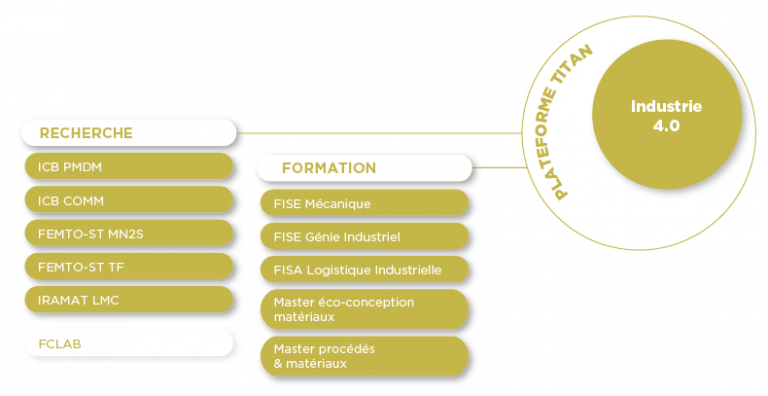
From 4D printing to innovative manufacturing processes, the Industry 4.0 cluster paves the way
for major industrial applications at the heart of student training.
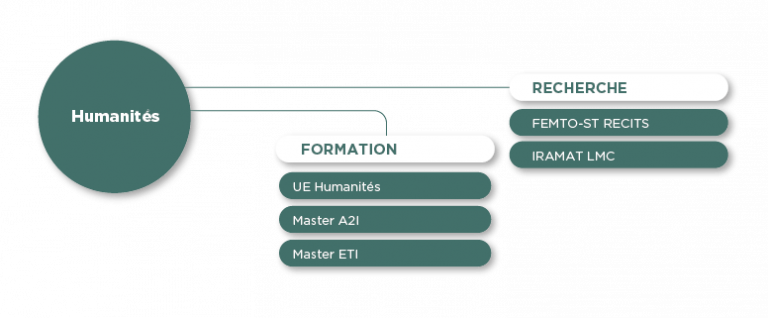
A humanities center within a university of technology: the unique “
” model aimed at training responsible and humanistic engineers.
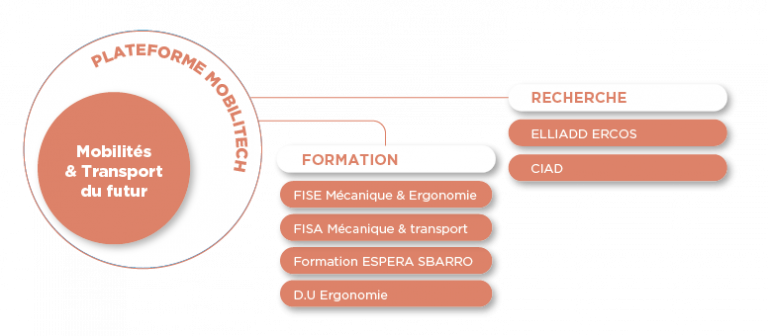
Technological projects that inspire us—provided they serve humanity and
our environment.
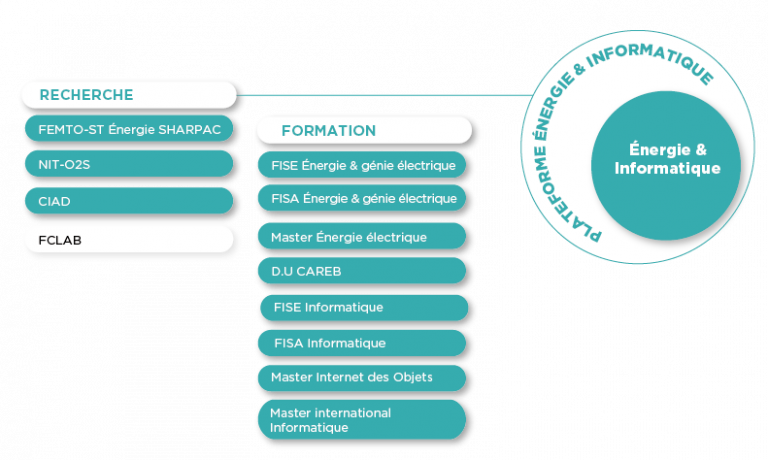
From today’s energy challenges to the promise of artificial intelligence, the “
: Energy and Computing” cluster opens the door to innovation that benefits our society.
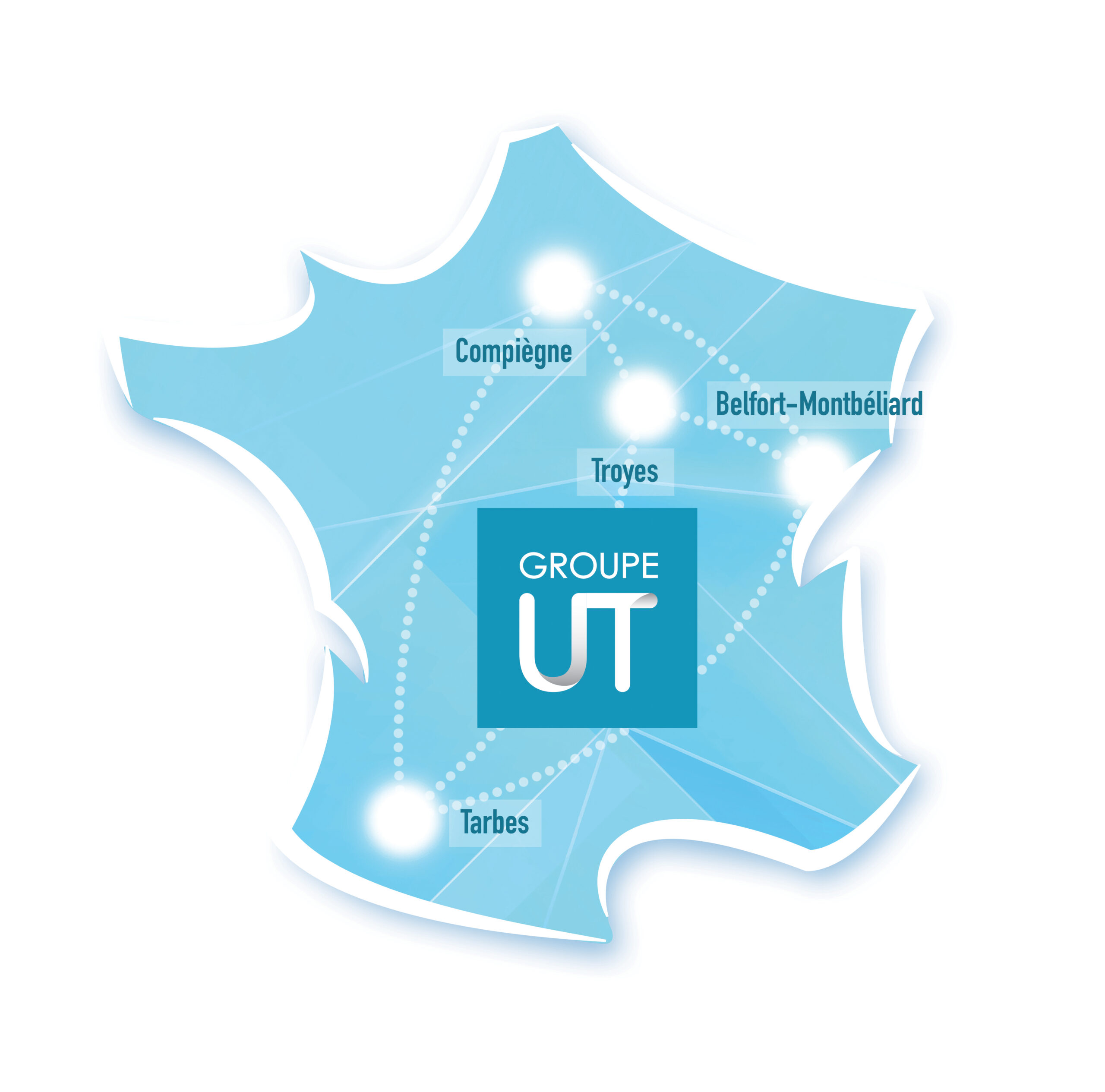
Universities of Technology are public institutions with a scientific, cultural, and professional focus. Under the supervision of the Minister of National Education, Higher Education, and Research, they award state-recognized degrees. As institutions that combine the characteristics of both engineering schools and universities, they occupy a unique position within the French higher education system.
Universities of Technology
engineering degrees
engineers graduating each year
Alumni
As of January1, 2025, UTBM has become a constituent institution ofthe Marie and Louis Pasteur University (UMLP), a new experimental university that brings together several higher education and research institutions in Bourgogne-Franche-Comté.
This change is part of a broader effort to strengthen academic and scientific cooperation.
By joining this initiative, UTBM reaffirms its commitment to innovation and technological development, while benefiting from a strengthened academic ecosystem.
UTBM is governed by a board of directors, assisted by a scientific advisory board and a council for academic affairs and campus life. The executive committee implements the policies established by these bodies.
The Board of Directors sets the institution’s policy. In particular, it votes on the budget, approves the financial statements, and deliberates on the UTBM’s major strategic directions.
14 external figures:
14 elected representatives:
President:
Bruno Joyaux
Director of GE GE Gas Power France
The Scientific Council makes recommendations to the Board of Directors regarding research policy, scientific and technical documentation, and the allocation of research funds.
It has 22 members:
Vice President
Samuel Gomes, University Professor
The Council for Academic Affairs and University Life makes recommendations to the Board of Trustees regarding the direction of undergraduate and continuing education programs, reviews applications for accreditation and proposals for new degree programs, and examines issues related to university life.
It has 20 members:
Vice President :
Daniel Depernet
University Professor
Student Vice President:
Matteo Boni
The Executive Committee implements the policies established by the Board of Directors and oversees the day-to-day management of the institution.
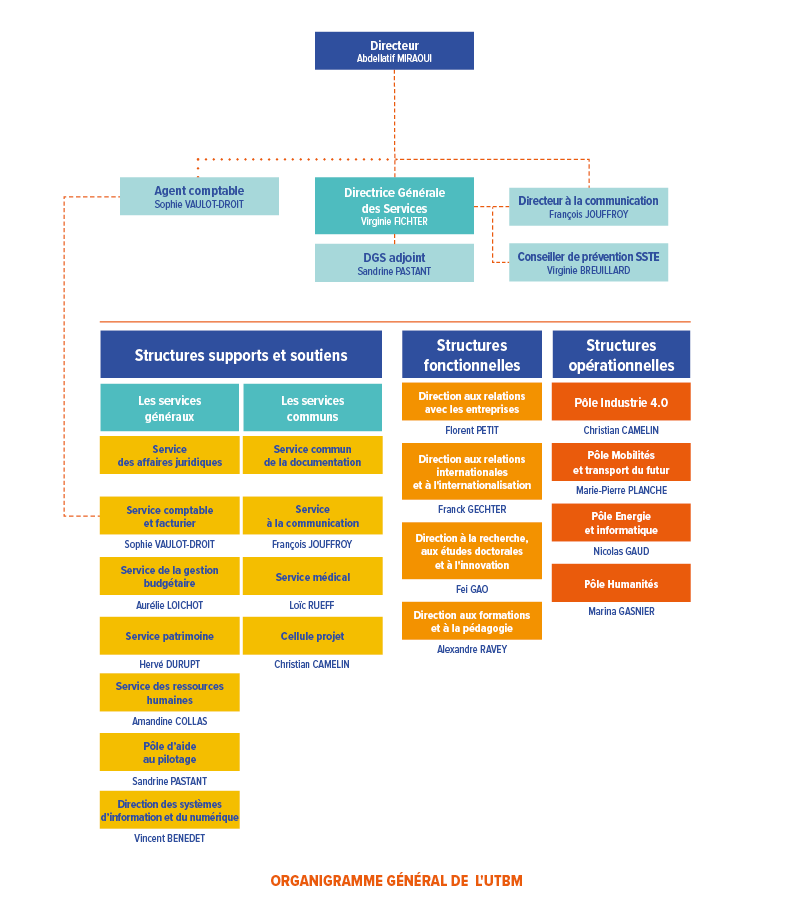
It is composed of functional directors (or program managers) appointed by the board of directors and elected department directors.
The director, who serves as chair, is appointed by the minister responsible for higher education upon the recommendation of the board of directors for a five-year term, which may be renewed.
President:
Abdellatif Miraoui Director of UTBM
Each division is managed by a division director and a division executive committee, which ensure the quality of the training programs and their alignment with the needs of the labor market.
Composition of the division's executive committee:
Find the resolutions adopted during the Board of Trustees meetings, organized by academic year.
2024–2025 Academic Year
2023–2024 Academic Year
2022–2023 Academic Year
2021–2022 Academic Year
2020–2021 Academic Year
2019–2020 Academic Year
Orders issued by the director of the UTBM: organizational structure of departments, appointments, delegations of signing authority, composition of examination committees, and procedures for assessing knowledge. The most recent orders appear first.
[To be completed: decrees from the 2019–2020 to 2025–2026 fiscal years, to be retrieved from the old website or archived in a summary PDF.]